Free printable, PDF

Printable chore chart by age: what 290 real families assign, from 2 to 18.

Most chore charts are a blank grid and a guess. This one is built from 6,000 chores that real families set up in Sense: one chart for each age from 2 to 18, plus a blank morning, after school and bedtime chart and a blank page for extras. Download the PDF, print it, stick it on the fridge. No email, no sign-up.

8 pages, landscape, updated September 2026

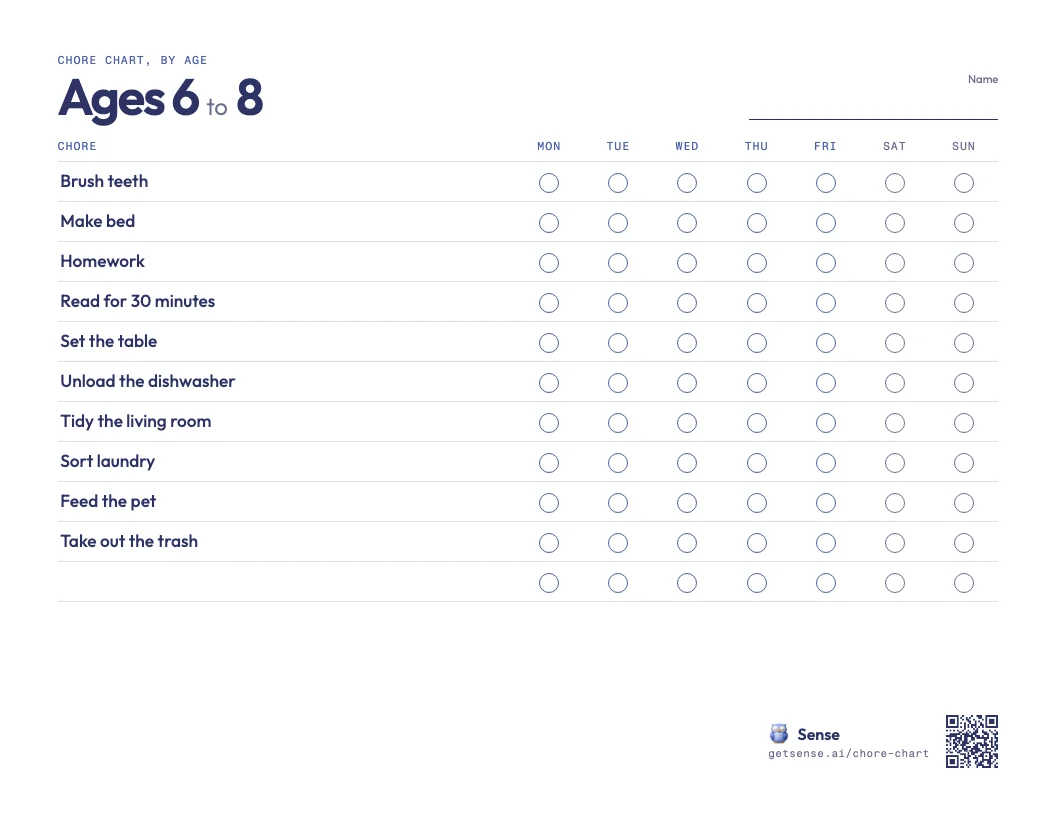
Printable chore chart for ages 6 to 8: a row for each chore and a ring to tick for every day of the week

Chores by age, in one sentence: kids aged 2 to 3 do routine steps like brushing teeth and picking up toys, 4 to 5 add making the bed and clearing the table, 6 to 8 start the dishwasher and the trash, 9 to 11 run their own laundry and pack their own lunch, 12 to 14 take on the bathroom and the lawn, and teens take whole rooms.

Where the lists come from

Not a guess. A count.

Sense is a family organizer with a chore chart built in. In September 2026 we took every chore that families had set up in it, 6,030 chores across 290 households, removed anything identifying, and counted how many families assign each one to a child of each age. The age pages below list the chores that came up most often for that age. That makes this a picture of what parents actually do, not a developmental checklist. Treat it as a starting point and adjust for your own kid.

Page 1

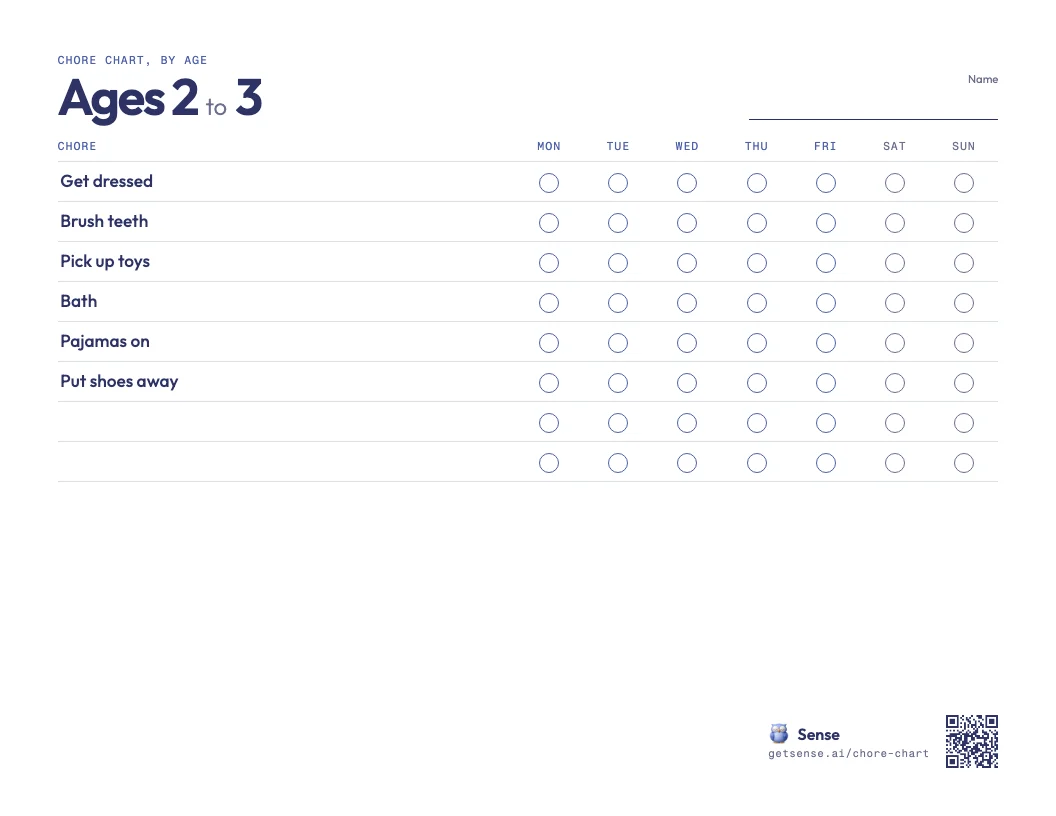
Chores for 2 and 3 year olds

At this age families put routine steps on the chart, not household jobs. Almost nothing on the list is a chore in the usual sense. It is the morning and bedtime sequence, made visible so a toddler can follow it without being told each step.

  • Get dressed (with help)
  • Brush teeth
  • Pick up toys
  • Bath
  • Pajamas on
  • Put shoes away
  • Potty

That is the whole list. Two blank rows on the printable are for the one or two things your toddler can already do.

Printable chore chart for 2 and 3 year olds

Page 2

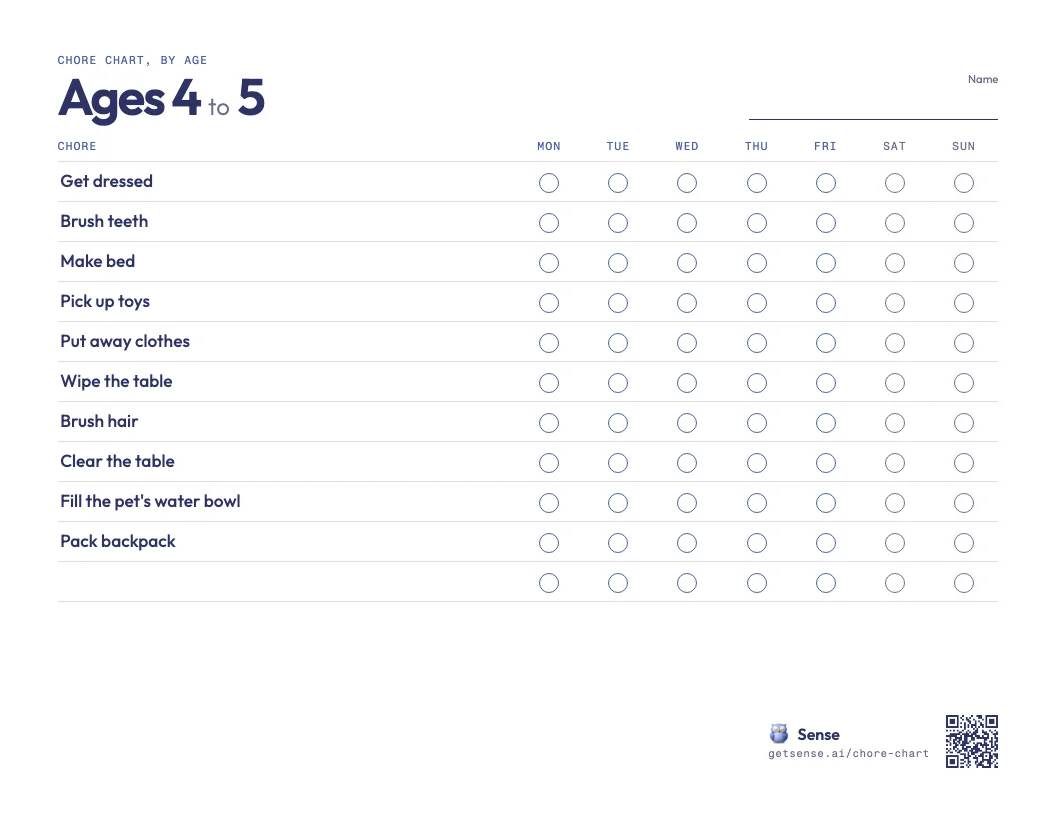
Chores for 4 and 5 year olds

Everything from ages 2 to 3 stays, and the first real tidying arrives. Preschoolers and kindergartners in the data are making their own bed, putting clothes away, and starting to help with the table and the pet.

  • Get dressed and brush teeth
  • Make bed
  • Clean room
  • Pick up toys
  • Put away clothes
  • Wipe the table
  • Brush hair and wash face
  • Clear the table
  • Fill the pet's water bowl
  • Pack backpack

A few families add "help pack lunch" and "read for 10 minutes" here. Both show up more often at 6 to 8.

Printable chore chart for 4 and 5 year olds

Page 3

Chores for 6, 7 and 8 year olds

This is where real chores start. Homework and "read for 30 minutes" appear on most charts for the first time, and the household jobs begin: the table, the dishwasher, the living room, the pet, the trash. More families in the data have a child in this band than any other.

  • Brush teeth, get dressed, make bed
  • Homework new at this age
  • Read for 30 minutes new at this age
  • Set the table and clear the table
  • Unload the dishwasher
  • Tidy the living room
  • Sort laundry
  • Feed the pet
  • Take out the trash
  • Pack backpack and unpack the lunchbox
  • Practice an instrument

Dusting, pulling weeds, and "take vitamins" show up in a handful of families. Showers replace baths for about half.

Printable chore chart for 6, 7 and 8 year olds

Page 4

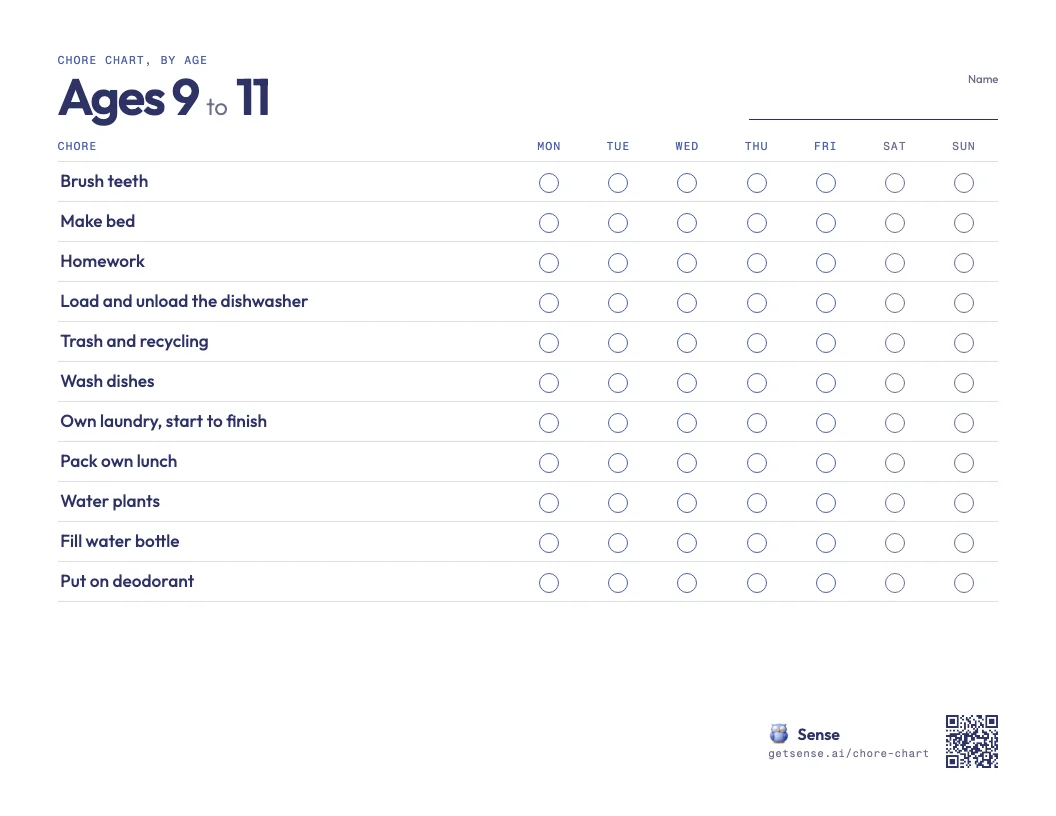
Chores for 9, 10 and 11 year olds

Same core as 6 to 8, bigger jobs. Tweens in the data take the dishwasher end to end, handle trash and recycling, wash dishes, and in many families run their own laundry from hamper to drawer. This is also the age where personal care items get written down.

  • Brush teeth, make bed, get dressed, homework
  • Load and unload the dishwasher
  • Trash and recycling
  • Wash dishes
  • Own laundry, start to finish
  • Pack own lunch
  • Water plants
  • Fill water bottle
  • Shower
  • Put on deodorant new at this age

"Read for 30 minutes" and "practice instrument" stay on most charts through this age.

Printable chore chart for 9, 10 and 11 year olds

Page 5

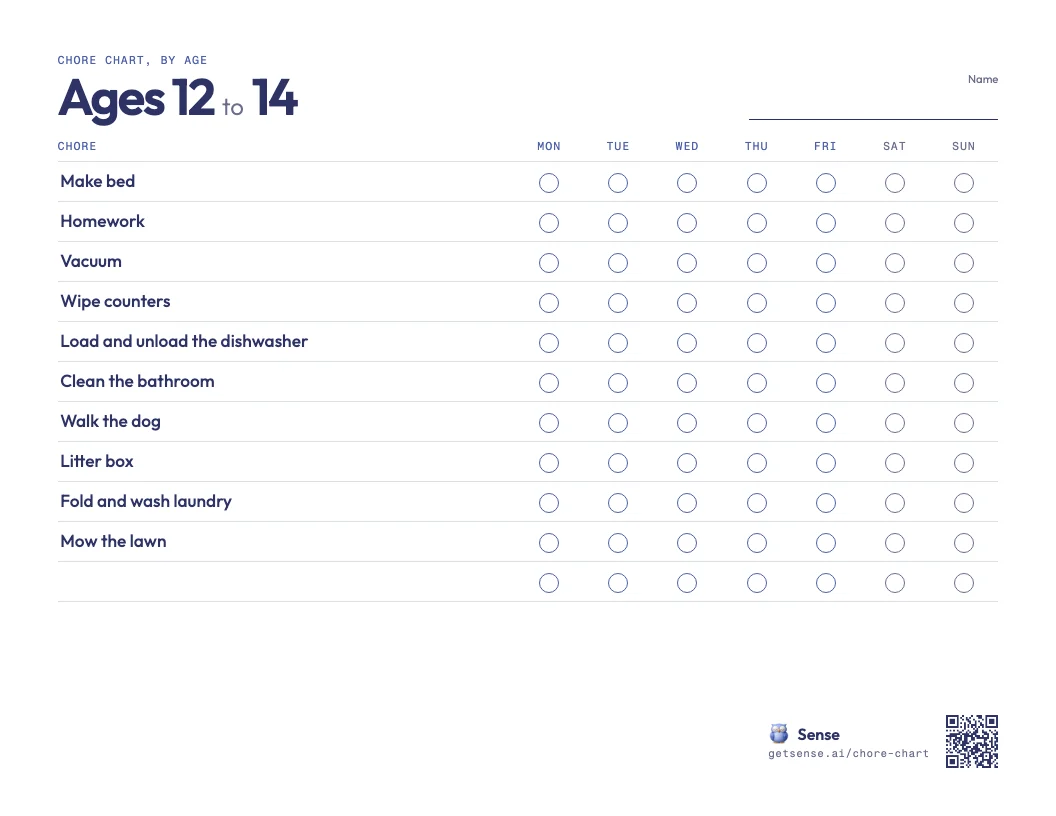
Chores for 12 to 14 year olds

Chores go whole-house. Middle schoolers in the data vacuum, wipe counters, clean the bathroom, and take on the pet completely: feeding, walking, litter box. Laundry moves from sorting to washing and folding. Homework and reading time are still on most charts.

  • Make bed, homework, read for 30 minutes
  • Vacuum
  • Wipe counters
  • Load and unload the dishwasher
  • Clean the bathroom
  • Walk the dog and feed the pet
  • Clean the litter box
  • Fold and wash laundry
  • Mow the lawn

Cooking appears for the first time, but only in a few families. It is more common at 15 to 18.

Printable chore chart for 12 to 14 year olds

Page 6

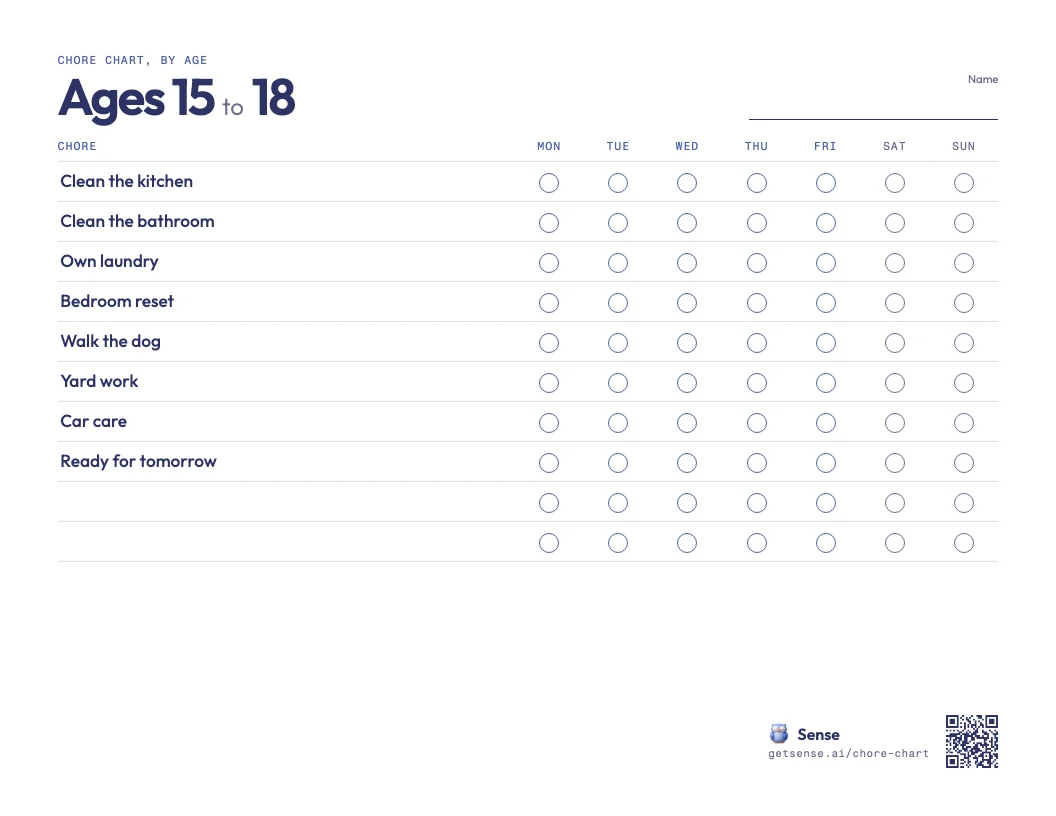
Chores for teenagers, 15 to 18

Fewer items, bigger ones. Teen charts in the data are short, and each line is a whole job rather than a step: the kitchen, the bathroom, their own laundry, the yard, the car. Two phrasings appear that no younger age uses: "bedroom reset" and "ready for tomorrow", meaning pack, charge, lay out clothes.

  • Clean the kitchen
  • Clean the bathroom
  • Own laundry
  • Bedroom reset
  • Walk the dog
  • Yard work
  • Car care
  • Cook dinner (some families)
  • Ready for tomorrow new at this age

Fewer families in the data have a teen with a birth date entered, so treat this page as directional.

Printable chore chart for teenagers aged 15 to 18

Page 7

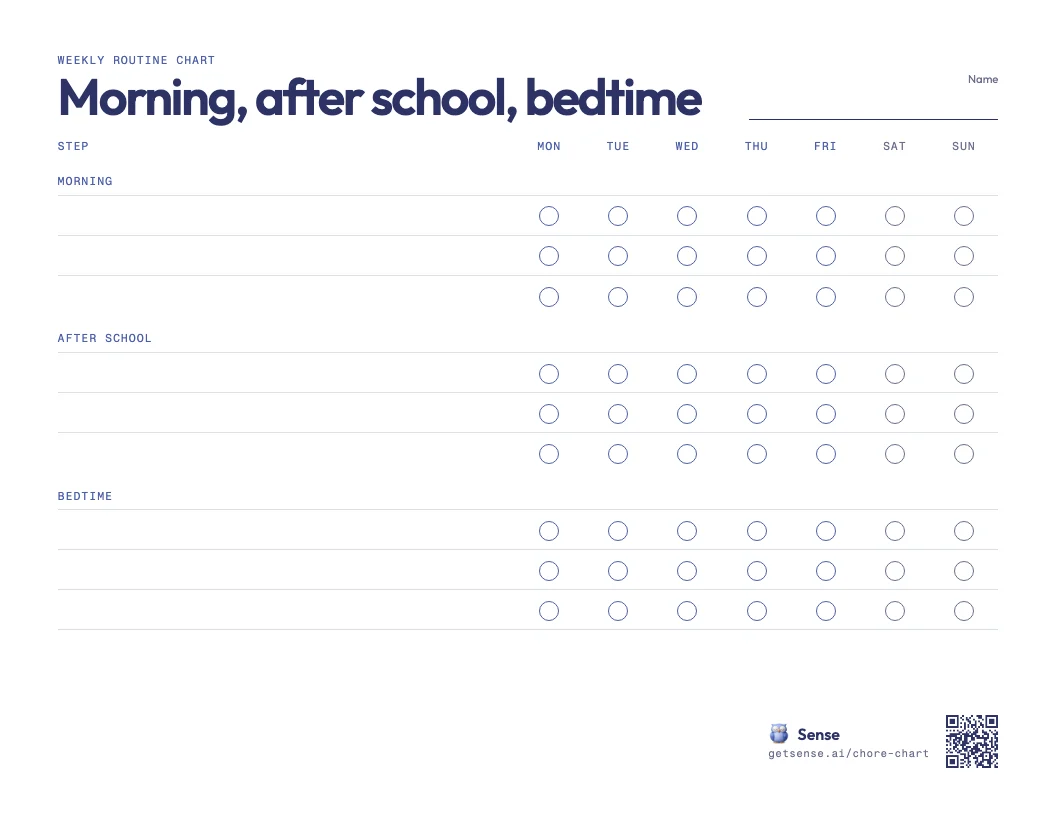
Blank weekly routine chart: morning, after school, bedtime

Half of all the chores in the data live inside a routine, and nearly every family builds the same three: Morning, After School, Bedtime. The last page is a blank weekly chart split that way, with three lines per routine for your own steps and a ring for every day.

If you want a starting point, this is the most common version across families. There is a longer walkthrough of the three routines and how families fill them in our free printable routine and chore chart post.

  • Morning: get dressed, brush teeth, make bed, eat breakfast, pack backpack
  • After school: unpack backpack, homework, read for 30 minutes, one house job
  • Bedtime: pick up toys, shower or bath, brush teeth, pack for tomorrow, clothes in the hamper
Blank printable weekly routine chart with morning, after school and bedtime sections

Page 8

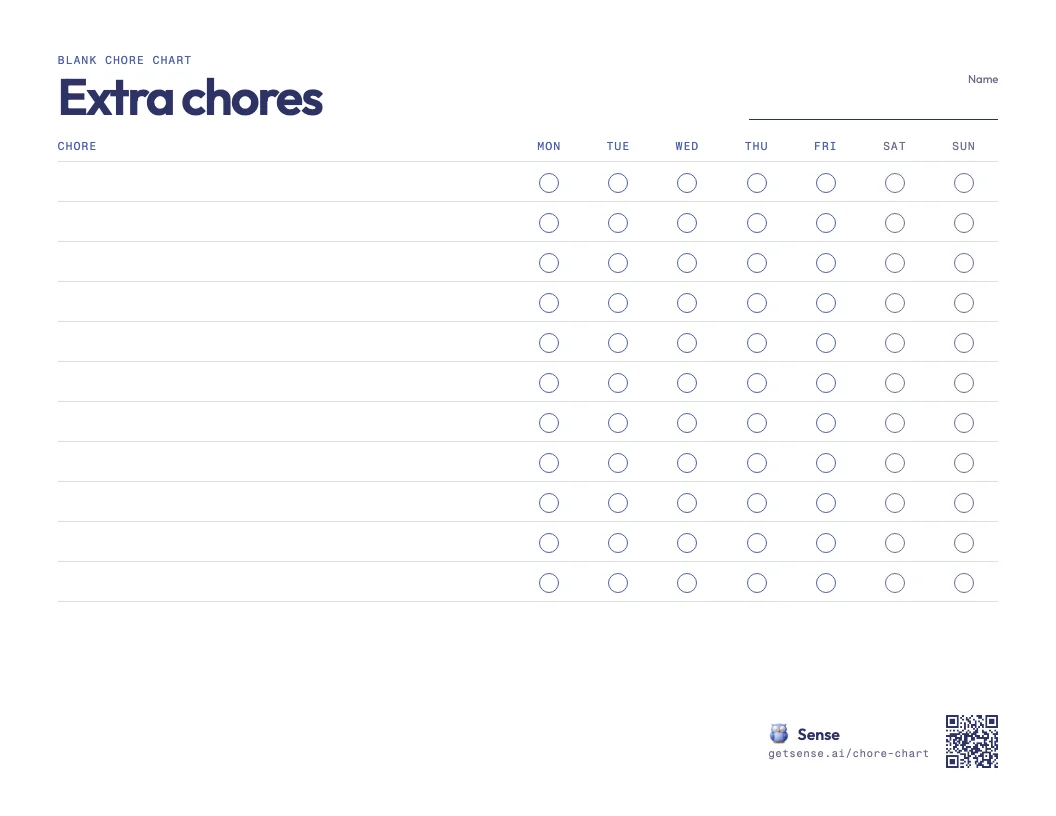
Blank weekly chore chart template for extra chores

Eleven empty rows with a ring for every day, for the jobs that aren't on the age pages or for a chart the whole family shares. House chores like vacuum, trash and the dishwasher are the ones families most often leave "up for grabs" for whoever does them first, and this page works well as that shared list on the fridge. Use the blank weekly chore chart template if you would rather write your own chores than start from the age lists.

Blank printable weekly chore chart with eleven empty rows and a ring for each day

At a glance

Age-appropriate chores, 2 to 18.

The same lists in one table. Each row is what most families with a child that age put on the chart, and the last column is what first appears at that age.

AgeMost common choresNew at this age
2 to 3Get dressed, brush teeth, pick up toys, bath, pajamas on, put shoes awayRoutine steps only
4 to 5Make bed, clean room, put away clothes, wipe the table, brush hair, clear the table, pet's water bowl, pack backpackMake bed, clear the table
6 to 8Set the table, unload the dishwasher, tidy the living room, sort laundry, feed the pet, take out the trash, practice an instrumentHomework, read for 30 minutes
9 to 11Load and unload the dishwasher, trash and recycling, wash dishes, own laundry, pack own lunch, water plants, fill water bottleDeodorant, own laundry
12 to 14Vacuum, wipe counters, clean the bathroom, walk the dog, litter box, fold and wash laundry, mow the lawnBathroom, lawn, full pet care
15 to 18Clean the kitchen, clean the bathroom, own laundry, bedroom reset, yard work, car careReady for tomorrow, car care

Patterns

What 6,000 chores taught us.

The top three "chores" aren't chores

Brush teeth, make bed and get dressed lead at every age from 2 to 18. Most families use the chart to get out the door in the morning without repeating themselves. The house jobs come second. If your chart is mostly hygiene and routine steps, you are doing what nearly everyone does.

Everyone builds the same three routines

Morning, After School, Bedtime. Half of all chores live inside one of them, and Morning is by far the most common. That is why page 7 of the pack is split that way rather than being a plain grid.

Weekends are mostly off

Chores scheduled on Saturday or Sunday run at about a third of a weekday. Families are deliberately not running the chart seven days a week. Leaving the weekend rings empty is normal, and the printable greys them slightly for that reason.

Points stay small

Where families attach reward points, the most common value is 5, the median is 10, and it barely changes from age 5 to 15. That is why the printable has no points column. Big numbers are not what motivates kids, and a column of tallies is the first thing to get abandoned on paper.

Personal chores get a name, house chores get left up for grabs

Make bed, brush teeth and homework are almost always assigned to one child. Vacuum, trash and dishwasher are the ones most often left unassigned for whoever grabs them first. On paper, that means a second sheet for the whole family works better than adding house jobs to each kid's page.

Using it

How to use the chore chart.

  1. Print the page for your child's age. US Letter in the United States and Canada, A4 everywhere else. Both are landscape. Black and white is fine.
  2. Cross out what doesn't fit, add what does. The lists are the most common chores at that age, not a requirement. The blank rows are for your own.
  3. Tick a ring when it's done. One ring per day. Let the child do the ticking. That is most of the motivation.
  4. Leave weekends light. Most families do. Empty Saturday and Sunday rings are not a failure.
  5. Reprint on Sunday night. A fresh sheet each week beats a laminated one. The chart changes as your kid does.

When the paper stops working

Paper charts fail in predictable ways.

The rings stop getting ticked by Wednesday. Your partner walks past it every morning and still asks what the kids are supposed to do. When that happens, the same chart lives in Sense's chore chart app: each child sees their own list on the family tablet or a parent's phone, chores repeat on the days you set inside morning, after school and bedtime routines, and completions add up on their own toward rewards or allowance. Tell the assistant "set up a morning routine for Maya with get dressed, brush teeth, make bed, breakfast and pack backpack" and it builds it, assigned and scheduled.

Questions parents ask

Chores by age, answered from the data.

What chores can a 5 year old do?

In the families we counted, 4 and 5 year olds most often make their bed, clean their room, put away clothes, wipe the table, brush their own hair, clear the table, fill the pet's water bowl and pack their backpack, on top of getting dressed and brushing teeth. Page 2 of the printable is that list.

What chores should a 10 year old do?

At 9 to 11, the most common chores are loading and unloading the dishwasher, trash and recycling, washing dishes, their own laundry start to finish, packing their own lunch, watering plants and filling their water bottle, alongside homework and reading. Page 4 of the printable covers it.

What chores should a teenager do?

Teen charts in the data are short and each line is a whole job: clean the kitchen, clean the bathroom, own laundry, bedroom reset, yard work, car care, and "ready for tomorrow". Page 6 of the printable is the teen chart.

How many chores should a kid have?

Families in the data assign between six and ten items per child per day, and most of those are routine steps like brush teeth and make bed rather than household jobs. The number of true household chores is usually two to four on a weekday and fewer on weekends. Every age page in the printable has room for about ten rows for that reason.

Should kids get paid for chores?

About two thirds of the chores in the data carry a small point value and the rest carry none. Where points exist, 5 is the most common value and it barely rises with age. In other words, most families use a token, not a wage, and plenty use nothing at all. The printable leaves points out so you can decide.

What age should kids start doing chores?

The youngest children on a chart in our data are 2, and at 2 and 3 the chart is routine steps: get dressed, brush teeth, pick up toys. Make bed and clear the table bridge in at 4 to 5, and the first real household chores, the dishwasher and the trash, appear for most families at 6 to 8. Starting with routine steps at 2 or 3 is what most parents do.

What chores can a 3 year old do?

Get dressed with help, brush teeth, pick up toys, bath, pajamas on, put shoes away, potty. That is the whole list for 2 and 3 year olds in the families we counted, and it is page 1 of the printable.

What chores should a 7 year old do?

At 6 to 8, homework and reading for 30 minutes join the chart, and the first household jobs arrive: set and clear the table, unload the dishwasher, tidy the living room, sort laundry, feed the pet, take out the trash. Page 3 of the printable is the 6 to 8 chart.

Do chore charts actually work?

We can only say what families keep doing. Of the 6,000 chores we counted, 86 percent are set to repeat, half sit inside a morning, after school or bedtime routine, and weekend chores run at a third of weekdays. The charts that last are short, tied to a routine the child already has, and light on weekends. The printable is built that way.

Is this expert advice on what kids should do at each age?

No. It is a count of what parents actually assign, taken from chores that 290 families set up in Sense, with anything identifying removed. Use it as a starting point and adjust for your child. The ages 2 to 3 and 15 to 18 pages rest on the fewest families, so treat those as directional.

Do I have to give you my email to download the chore chart?

No. The download buttons link straight to the PDF. There is no form and no sign-up.

Which size should I print, Letter or A4?

US Letter for the United States and Canada, A4 for the UK, Australia, New Zealand and most of the rest of the world. Both are landscape and print fine in black and white, though the rings look best in color.

Can I share the chore chart?

Please do. Send it to another parent, post it in your class group chat or school parent page, or print a stack for a playgroup. All we ask is that you keep the footer with the source on it.

Is there a chore chart app instead of paper?

Yes. The same by-age lists are built into Sense, with routines, repeat schedules, kid mode on a shared tablet, and rewards that add up on their own. The printable is the paper version of the same thing.

Download the free chore chart PDF. Print it tonight.

Sense is free to download. Premium is free to try, no card required.