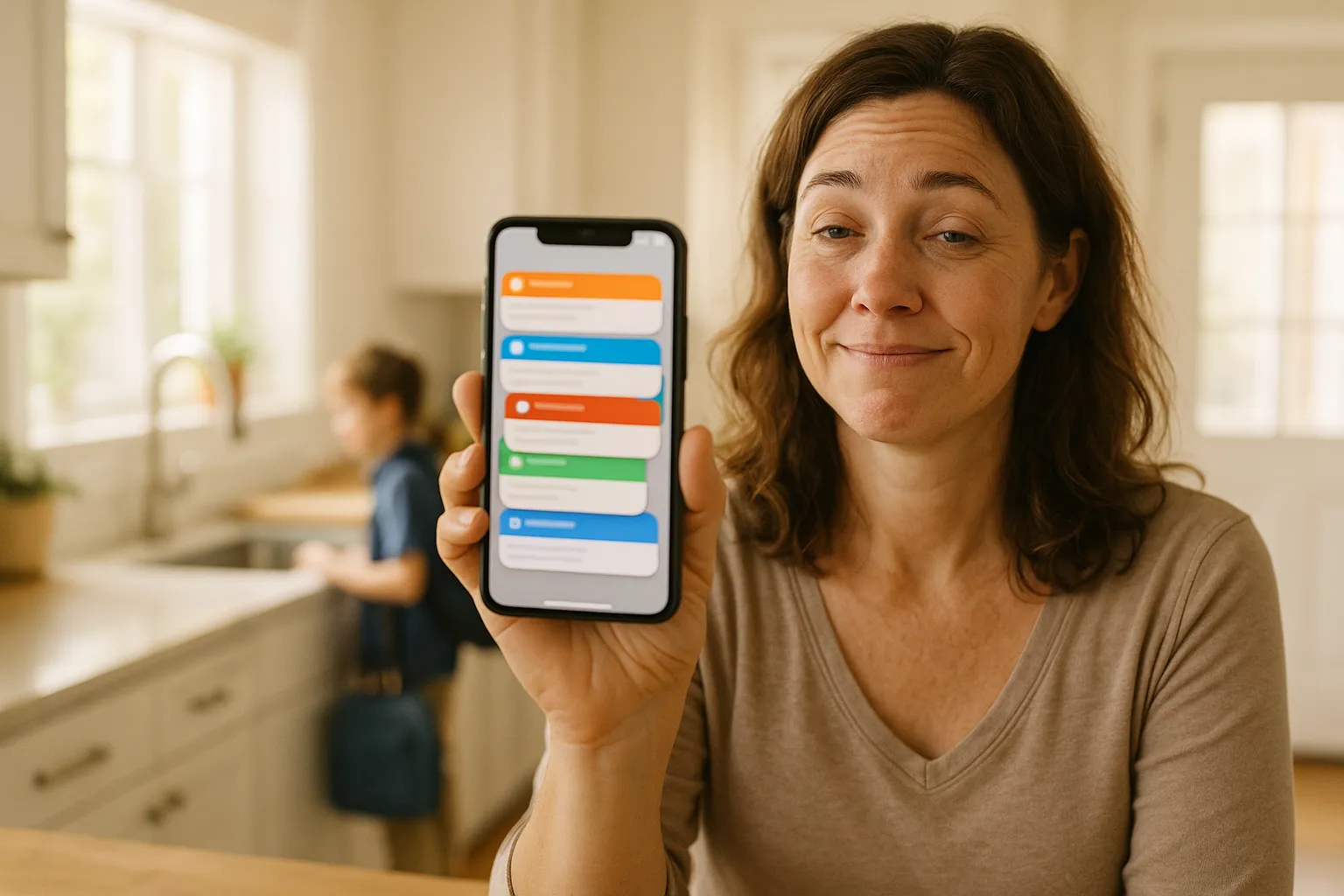


You expected the tears, the early wake-ups, the tiny backpack that undoes you a little. What no one mentions is the administrative weather system that rolls in behind them. Here are the parts that catch almost everyone off guard, said plainly - not to fix you, just because it helps to see them named.
1. Your personal inbox turns into a work inbox
Overnight, the school, the district, and the teacher are all in your email more often than most of your coworkers. You didn't apply for this correspondence. It found you.
2. The important part is always buried
The email is six paragraphs of warmth and one sentence that matters: the form is due Friday, the field trip needs $12, the schedule changed. Reading it isn't the work. Finding the part that's actually for you is the work.
3. It's not one app. It's five.
One for messages, one for grades, one for payments, one for the after-school program, one the PTA swears by. Each owns a sliver of what's happening and pings on its own schedule. You wanted fewer notifications. You got a fragmented dashboard of a five-year-old's life.
4. Half the news never leaves the backpack
For everything that arrives digitally, something important still travels home as a crumpled flyer in a side pocket - discovered, if you're lucky, the week after it mattered.
5. The calendar is a minefield of half-days
Early dismissal, teacher work day, late start, conference afternoon, a random Friday off. Daycare never did this. Now there's a whole category of days that quietly detonate your work schedule if you miss the notice.
6. Theme weeks are a costume schedule in disguise
Pajama Monday, jersey Tuesday, crazy hair Wednesday, and a color for each day of Spirit Week. It arrives as one cheerful email and lands as five separate mornings you now have to plan wardrobe around.
7. Two kids doesn't mean twice the email. It's worse.
You get the same district notice twice, plus each teacher, plus each classroom app, and none of the systems seem to know the two children live in the same house.
8. There's a text telling you to check the email
A notification about a notification. And occasionally the thing hiding behind that "please check your email" is genuinely important, so you can't quite ignore it either.
9. It quietly becomes one person's job
Whoever reads it first becomes the one who knows. Without anyone deciding it, one parent turns into the household's information manager - the only one who remembers picture day, the only one asked what's for dinner and when the game is. The load is invisible right up until something slips.
10. Then the activities start, and it doubles
Just as you find a rhythm with school, sign-ups open for soccer, swim, and music, each with its own emails, its own schedule changes, and its own group chat. The operation you just learned to run gets a second location.
11. The guilt is disproportionate to the stakes
Your kid mentions at 7:45 that today was silly hat day, and Emma's mom remembered. It does not matter in any real way. It sits with you all morning anyway.
12. It's a part-time job nobody interviewed you for
Somewhere in the first month it clicks: managing a family's logistics is real, ongoing operations work, and you were hired without notice, without a handover, and without a second set of hands. This is the year a lot of parents finally understand why it felt like this.
None of this is a discipline problem
If you've read this far nodding, notice what isn't on the list: you weren't organized enough. You are almost certainly plenty organized. The system is genuinely fragmented, aimed at one person, and formatted for the school's convenience rather than your calendar. A better planner doesn't fix a supply problem.
What actually helps is moving the pieces out of your head and into one shared place. That's the gap Sense is built for: forward a school email, a flyer, or a screenshot to share@getsense.ai, and the dates, deadlines, and to-dos get pulled out and put on a family calendar - reminders to sign the form, an item on a shared list, the half-day added before it ambushes you. Here's the mental shift that makes it click, and how the reading actually works.
It won't make the school send less. It takes the tedious, repeated, invisible part - the decoding and the re-typing - off one person's plate, and puts the result somewhere the whole family can see. That's the difference between surviving the first year of school and spending it as the only one who knows what's happening.